


The Real Reason Mid-Market Companies Fire Their IT Provider
The Real Reason Mid-Market Companies Fire Their IT Provider
Mid-market companies don't fire their IT provider because servers fail. They fire them when leadership loses confidence.
After more than four decades serving mid-market businesses across Southern California, Arizona, and Nevada, one pattern has repeated itself with surprising consistency.
Companies rarely leave their managed IT services provider because of technical incompetence.
They leave because of silence.
Not the kind of silence that happens overnight. The kind that happens in the middle of a crisis, when no one knows if anyone is actively working on the problem. And in business, silence feels like indifference.
The $47,000 Moment
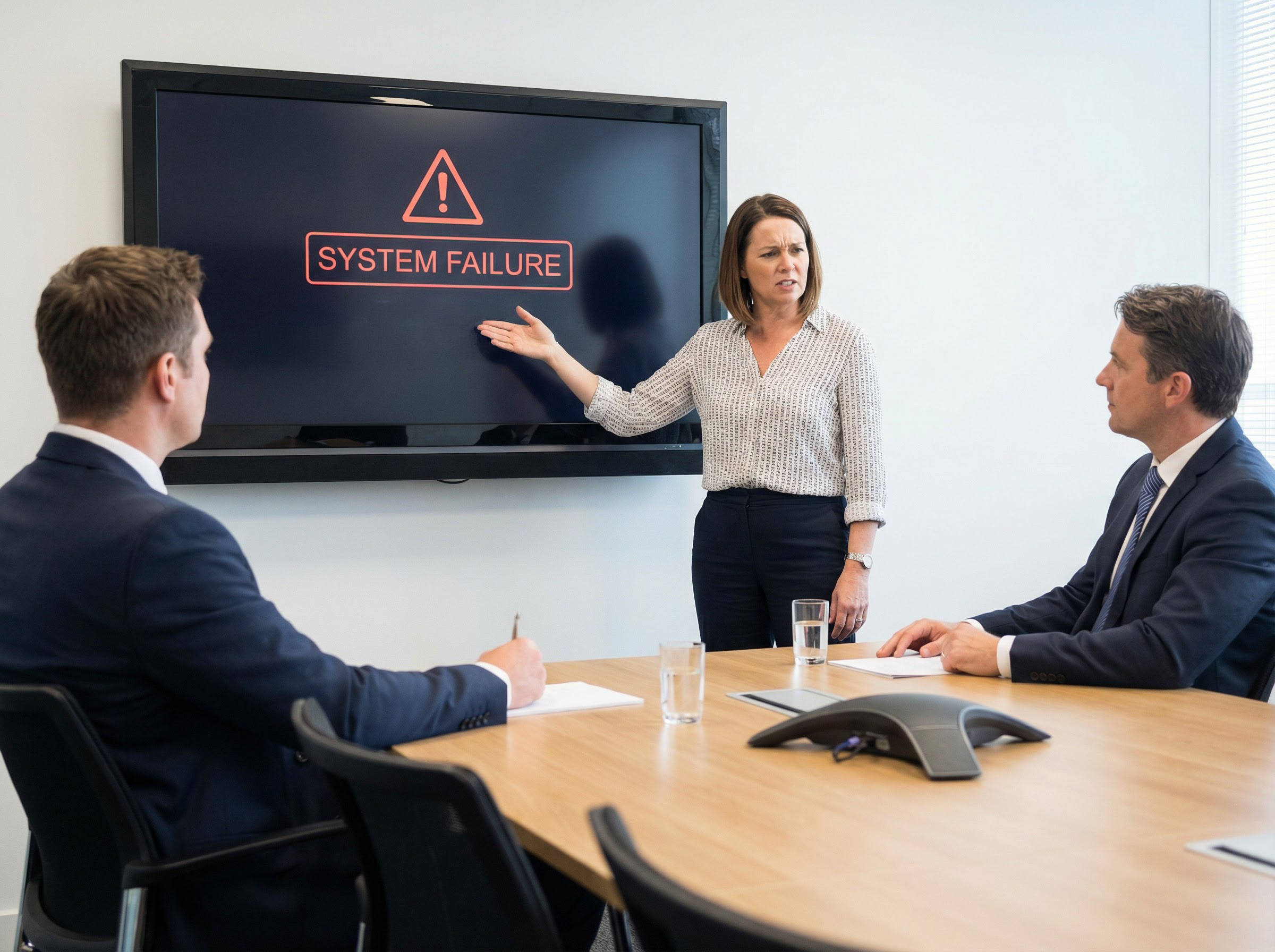
An Orange County professional services firm was finalizing the largest contract of the year.
At 9:30 AM, their senior partner couldn't access critical proposal files ahead of a 10 AM board presentation.
A ticket was submitted immediately. Marked urgent.
No acknowledgment.
By 9:45 AM, they called their IT support provider.
"We're aware of the ticket. We'll respond within our four-hour SLA."
The issue was a simple authentication error that took 12 minutes to resolve once addressed.
The impact was far more significant: a compromised presentation, a lost $47,000 contract, and a damaged reputation.
They didn't leave because of technical incompetence.
They left because their business emergency was treated like a routine ticket.
The Pattern No One Talks About
Over the past decade, we've conducted hundreds of onboarding conversations with organizations transitioning away from their incumbent IT provider.
The story rarely begins with a catastrophic breach or total infrastructure collapse.
Instead, it begins with phrases like: "We just didn't feel supported." "We weren't sure what they were doing." "We had to follow up multiple times." "No one took ownership." "We stopped trusting them."
Trust doesn't erode through dramatic failure.
It erodes through repeated micro-moments of ambiguity.
And in mid-market organizations (where leadership is directly tied to operations) ambiguity is expensive.
The Mid-Market Reality
Enterprise companies have layers.
They have CIOs, internal IT directors, cybersecurity teams, risk committees, and formal escalation frameworks.
Mid-market companies do not.
A 75-employee law firm. A 120-person construction company. A 60-employee accounting practice.
In these organizations, the CFO may also oversee operations. The COO manages vendors directly. The CEO personally approves strategic technology decisions.
When something breaks, it doesn't disappear into an internal department.
It lands directly on the desk of someone whose time is already stretched thin.
Mid-market leaders don't have the luxury of uncertainty.
They don't have buffer layers. They don't have redundant oversight. They don't have time to chase updates.
That's why communication matters more in mid-market environments than anywhere else.
The True Cost of Silence
When communication disappears during an incident, three things happen immediately.
Leadership Loses Control
Without visibility, executives cannot assess impact.
Is this operational? Is it revenue-threatening? Is it reputational? Is it regulatory?
Without information, leadership cannot make informed decisions.
And uncertainty spreads faster than technical disruption.
Teams Begin to Work Around IT
When departments lose trust in response time, they stop relying on formal processes.
They create shadow IT solutions. They use personal devices. They share files through unsecured platforms. They bypass security controls to "get things done."
What began as a communication lapse becomes a security vulnerability.
The Relationship Becomes Transactional
The moment leadership feels they need to chase their IT provider for updates, the relationship changes.
It is no longer strategic. It becomes reactive. Defensive. Transactional.
At that point, the exit is no longer a question of if but when.
The SLA Illusion
Most managed IT providers rely heavily on Service Level Agreements.
Response time. Ticket closure. System uptime.
But automated acknowledgment is not active resolution.
And SLA categories are typically based on technical severity, not business impact.
An authentication issue may rank low technically.
But if that authentication issue blocks a revenue-generating event, its business severity is high.
Mid-market companies operate based on revenue, reputation, and operational continuity.
You can meet every SLA and still lose the client.
The 2 PM Critical Ticket Test
Imagine it's 2 PM on a Tuesday.
Your accounting platform goes down. Payroll is processing. Clients are waiting. Your finance team is blocked.
You submit a ticket marked urgent.
Now ask yourself:
How quickly would someone respond personally? Would you receive proactive updates? Would someone take ownership? Would escalation happen automatically? Would your executive team feel informed?
Or would you receive an automated confirmation email?
Mid-market companies don't fire IT providers because of isolated incidents.
They leave when this test fails repeatedly.
Help Desk vs. Strategic Partner
A help desk solves tickets. A strategic partner understands your business.
A help desk measures uptime. A strategic partner measures operational continuity.
A help desk closes issues. A strategic partner protects revenue.
Technology is no longer a support function. It is directly tied to how your organization makes money.
What Real Partnership Looks Like
A true strategic IT partner begins not with infrastructure, but with business understanding.
What drives your revenue? Which events are mission-critical? Where does a two-hour delay create financial risk? Which departments cannot afford downtime? What level of communication does your executive team expect during disruption?
Real partnership means:
Named accountability. Clear escalation pathways. Incident communication playbooks. Pre-defined executive update intervals. Automatic escalation when business risk increases.
It means leadership never wonders whether someone is working on the issue.
Don't Wait for Your $47,000 Moment
Technology failures are inevitable.
Communication failure is preventable.
Before your next board presentation, acquisition review, client renewal, or payroll cycle, ask yourself one question:
If a critical system fails at 2 PM, will your IT partner communicate like your revenue depends on it?
At i-NETT, we begin not with servers, but with understanding how your business generates revenue and where communication gaps create risk.
Because mid-market companies don't fire their IT provider when systems fail.
They fire them when leadership stops feeling protected.
Experience the difference that strategic partnership makes. Book a Strategic Business Review to discuss how our business-first approach and radical transparency transform managed IT support from a source of anxiety into competitive advantage.
Contact i-NETT Today | (858) 324-4900